We are planning a 9-day field effort off Kaua’i starting August 16th. This project is primarily funded by the U.S. Navy as part of their Marine Species Monitoring Program and is timed to occur prior to a Submarine Command Course (SCC). Our primary goal is to deploy LIMPET satellite tags on one or more species of odontocete cetaceans prior to the SCC, to be able to examine their behavior before, during, and after the SCC. This approach has been very successful in the past as a way of examining how different species respond to Navy training activities including mid-frequency active sonar (MFAS). During this effort we are also hoping to deploy one or more finmount tags on spinner dolphins using the TADpole tool, continuing a project we began last year in collaboration with the Sarasota Dolphin Research Program. You can learn more about that work from our May/June 2026 field project update page.
This will be the 18th year we’ve worked off Kaua’i (our first project there was in May and June 2003), and our 23rd field effort off the island. In addition to our primary goal, these efforts contribute to our general understanding of what species of whales and dolphins use the area around Kaua’i and Ni’ihau, and photos obtained feed in to our photo-identification catalogs for many different species. The field team will include Colin Cornforth, Mark Mohler, Danny Barrios, Delaney Trowbridge, Robin Baird, and a number of volunteers.
Our work off Kaua’i in the past has really benefited by reports of whales or dolphins by local tour operators and fishermen - if you happen to be on the water off Kaua’i between August 16th and August 24th and see any pilot whales, false killer whales, melon-headed whales, pygmy killer whales, killer whales, or sperm whales, please call us! If you don't have the cell number of our field crew, contact Robin Baird at "rwbaird" "at" cascadiaresearch.org and we can provide it ahead of time.
[We posted updates every second day or so - the most recent are at the top].
The map above shows the tracks of the individuals we have tagged this project that have been transmitting the last few days. The map updates automatically as new locations come in, but with a one-day delay and a two-day window (so this shows two days of movements of each individual - after September 7th the tags are duty cycled to transmit every second day). You can identify the species using the two letter codes (Sl = Stenella longirostris = spinner dolphin; Pe = Peponocephala electra = melon-headed whale; Gm = Globicephala macrorhynchus = short-finned pilot whale; Pc = Pseudorca crassidens = false killer whale; Sb = Steno bredanensis = rough-toothed dolphin).
End of project update
Over the last nine days we made it out on the water eight days (all except the day that Tropical Storm Lala passed by), covered almost 900 km of trackline, encountered eight species of dolphins and whales, took 20,669 photos (and quite a few videos), and deployed eight tags (on five different species, including one additional tag on a rough-toothed dolphin on our last day). Overall a very successful project! As of the morning of August 25th all tags were still transmitting and we are looking forward to learning more about these species as tag data continue to come in and we start the process of analyzing the data and photographs.
August 23rd update
Today was a good day on the water. We decided to go east from the harbor and found a group of spinner dolphins. But after leaving the spinners, still in shallow water along the south shore we found a widely-dispersed group of false killer whales! We were able to deploy two depth-transmitting satellite-linked tags and obtained ID photos of three individuals before having to leave the group as they headed into rough seas. We sent photos to Sabre Mahaffy, our catalog curator, and she was able to identify the individuals as part of a rarely-seen subgroup of Cluster 3 of the endangered main Hawaiian Islands population. These individuals were last seen in 2024!
August 22nd update
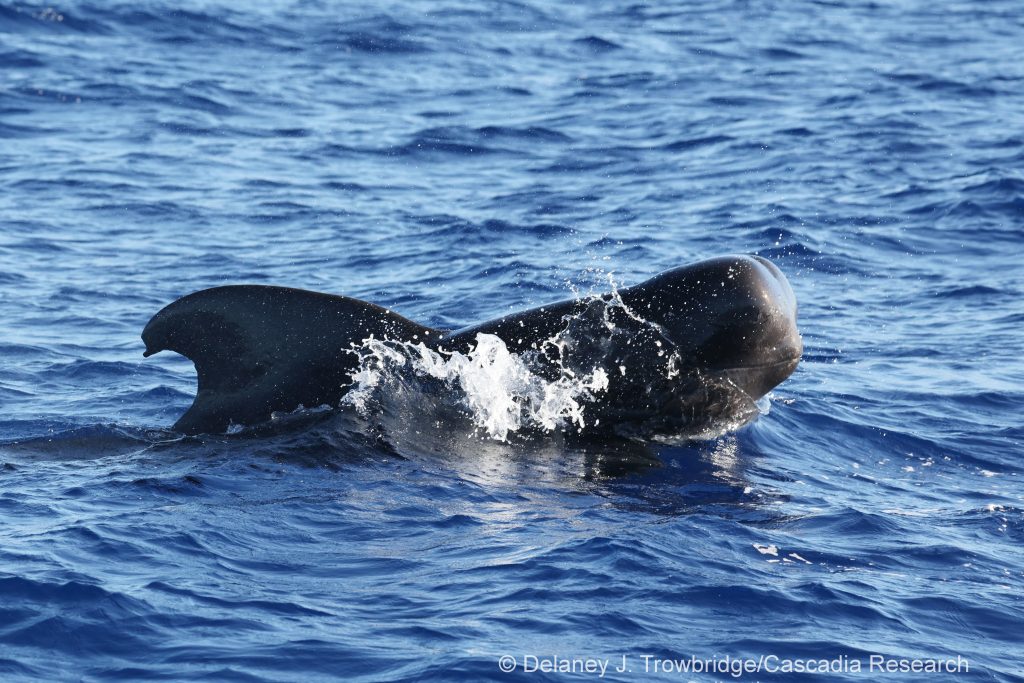
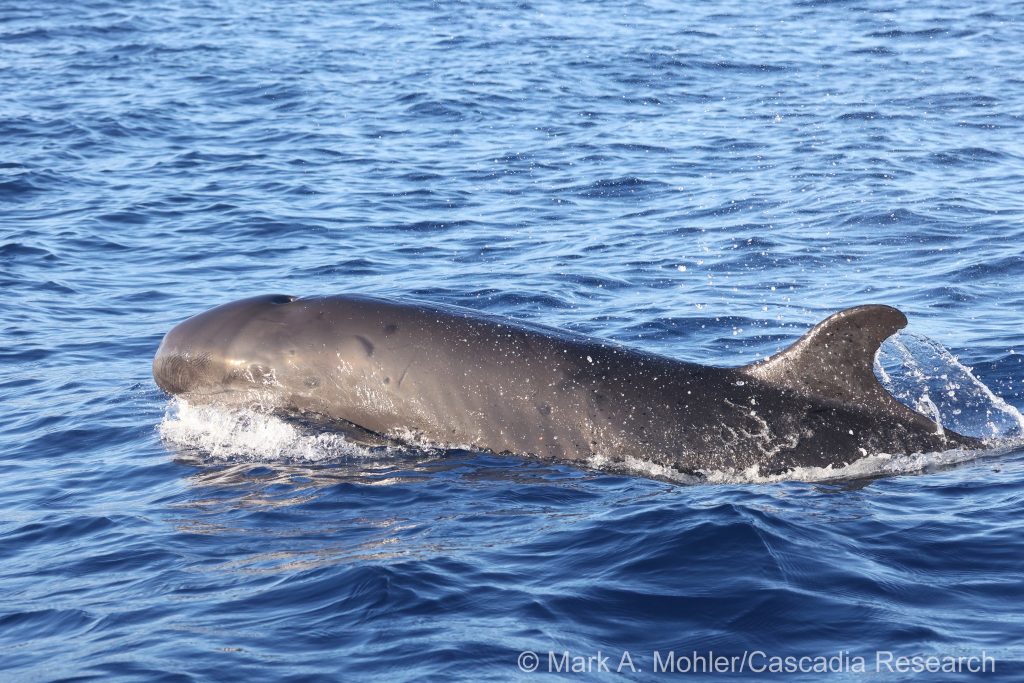
In the last two days we've encountered two new species of cetaceans for the trip, bringing the total to seven. Today, with thanks to a call from Holoholo Charters, we encountered a group of short-finned pilot whales. We were able to get ID photos of most of the individuals present and deployed one satellite-linked tag.
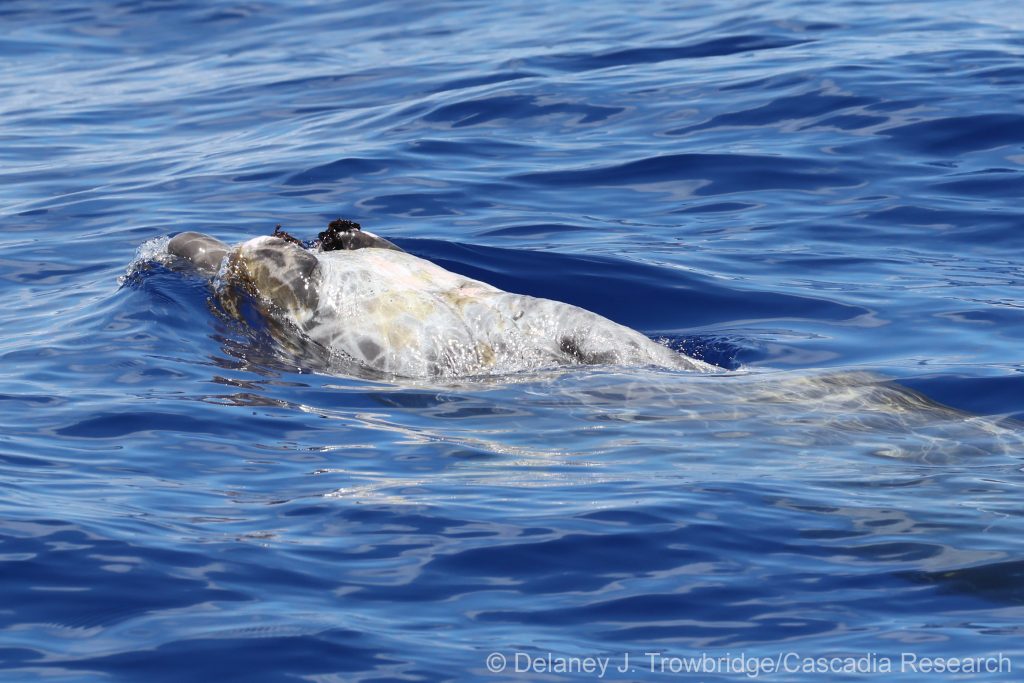
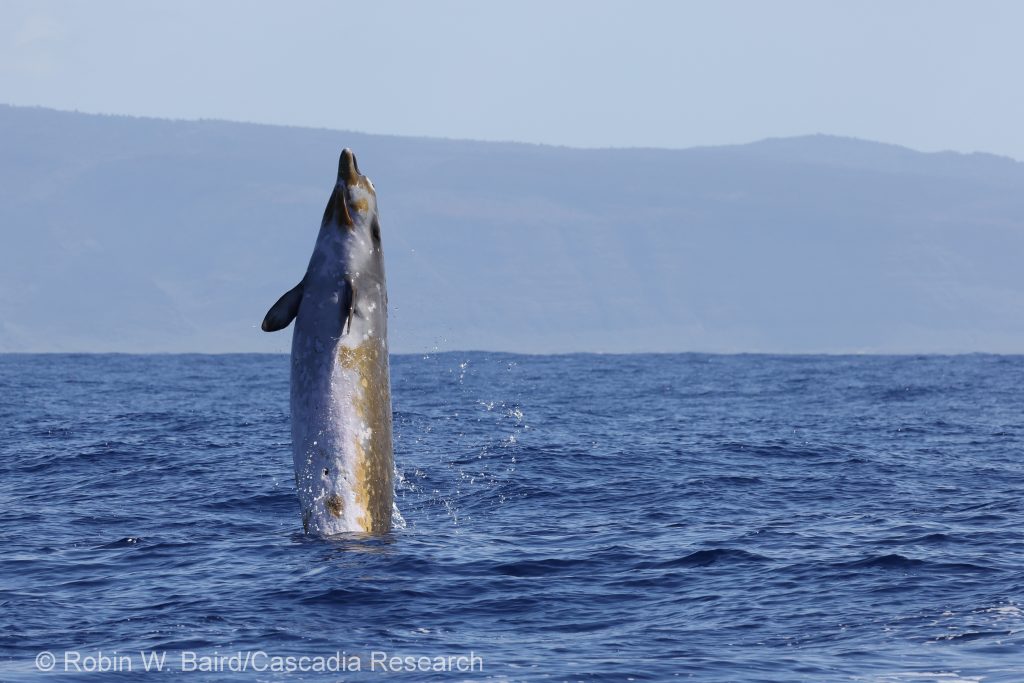
We also had two encounters with Blainville's beaked whales, and were able to get ID photos of about six different individuals. The photo above shows an adult male, with the tip of the rostrum to the left, the high arches of the lower jaws, and some stalked barnacles on the tips of the two erupted teeth.
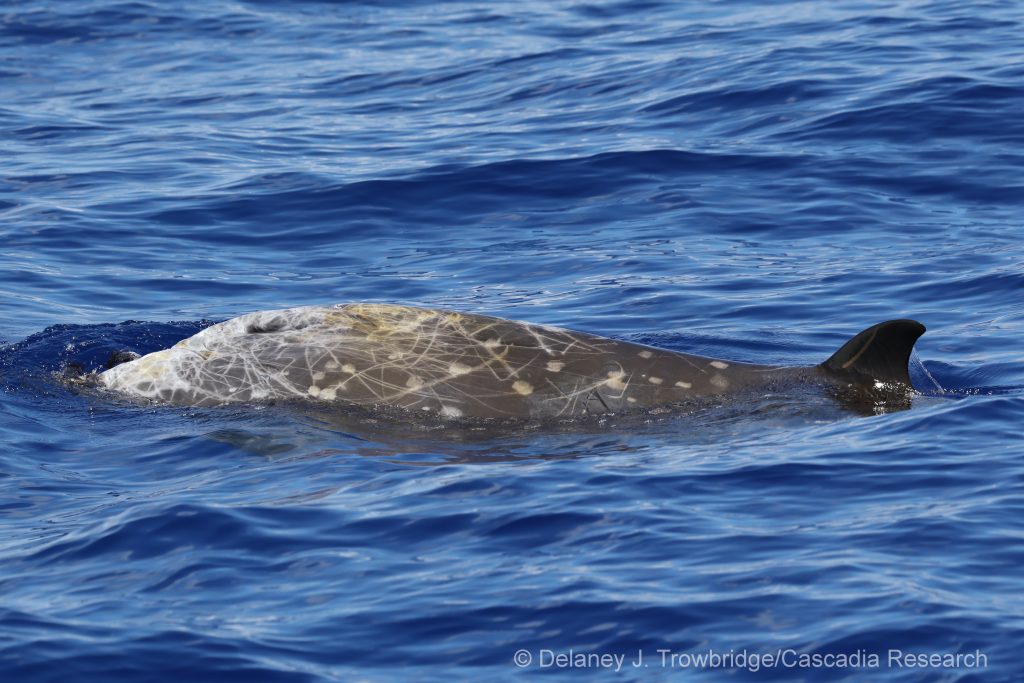
Adult male Blainville's beaked whales fight with other adult males over access to females, and this male has obviously had a lot of fights, with many linear scars and missing a lot of tissue. In additional to the linear scars, there are many oval white scars caused by cookie-cutter shark bites.
August 20th update
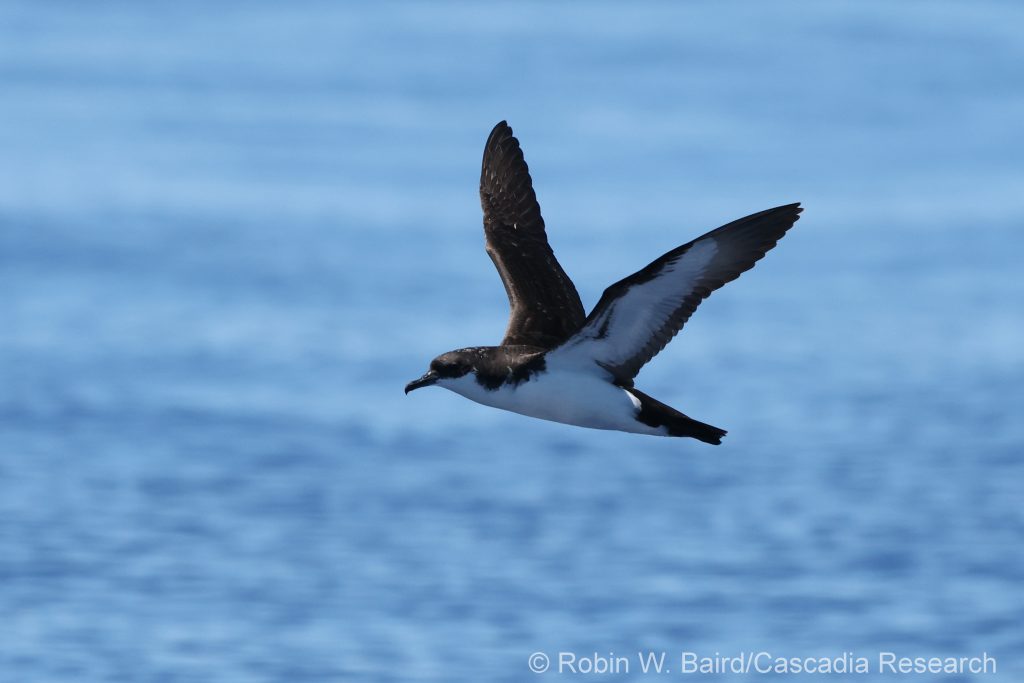
While our work focuses on cetaceans we also record and photograph seabirds. At this time of the year we are seeing large numbers of seabirds, including this ‘A‘o (Newell's Shearwater), a threatened endemic species. If you want to learn more about the seabirds we see in Hawaiian waters check out our seabird page.
August 18th update
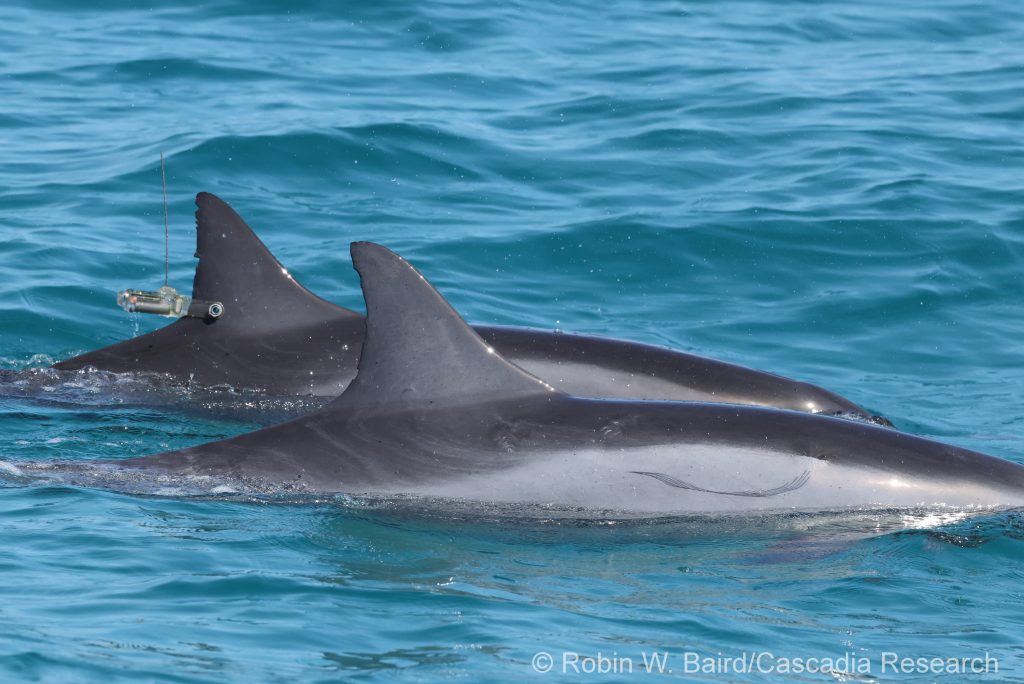
Today we deployed a finmount tag on a spinner dolphin, the first spinner dolphin that has been tagged off Kaua‘i. The tagged dolphin is shown above with a companion, and was easily approachable after tagging, coming back to briefly bowride within 15 minutes after tagging. This tag is a Wildlife Computers SPLASH tag, providing information on diving behavior (dive depths and durations) in addition to location information. The tag is only expected to stay attached for at most 1-2 weeks due to a magnesium release mechanism, but it is transmitting 24 h/day so we are hoping to get a detailed record of both movements and behavior. This is the 16th spinner dolphin that we've tagged in Hawai‘i and the 4th that we've tagged with a SPLASH tag. If you want to learn more about our work with spinner dolphins check out our spinner web page.
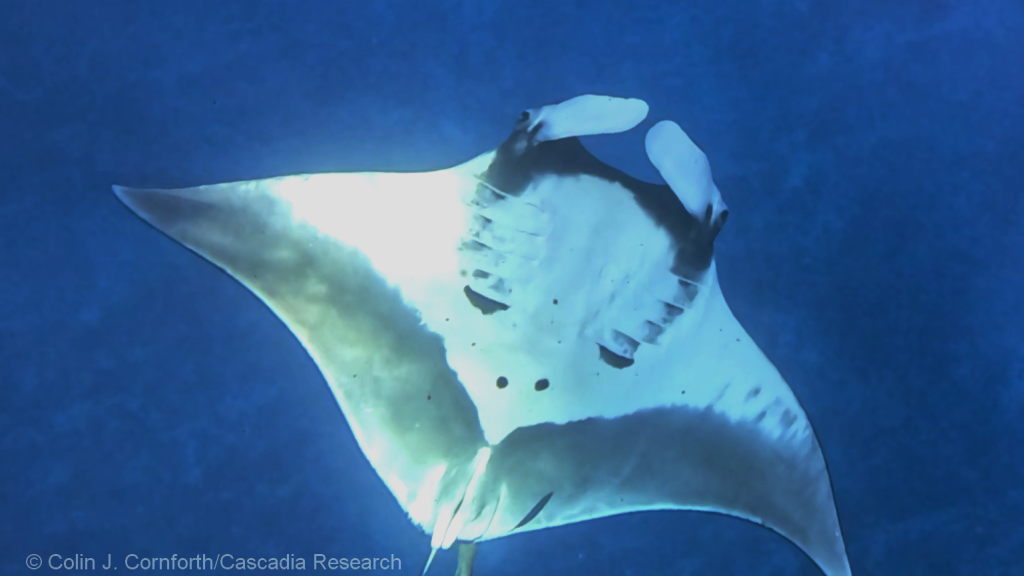
We also documented an oceanic manta, only the second that we've photographed off Kaua'i. This is an endangered species and when we see we try to obtain images that can be used to identify individuals, and pass these images along to the Marine Megafauna Foundation and other researchers.
August 17th update
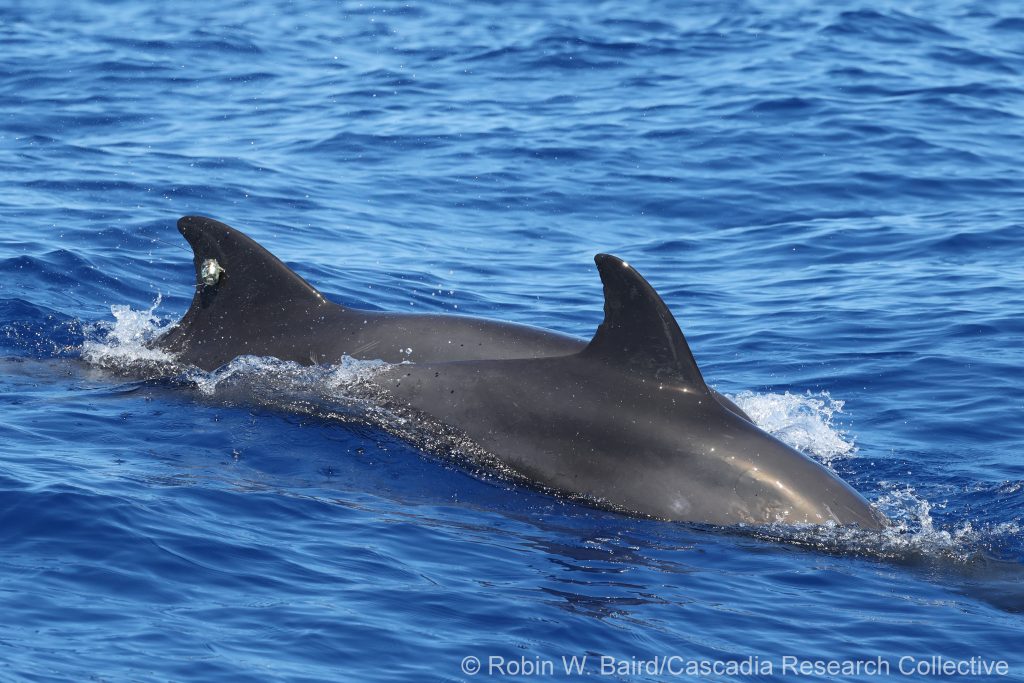
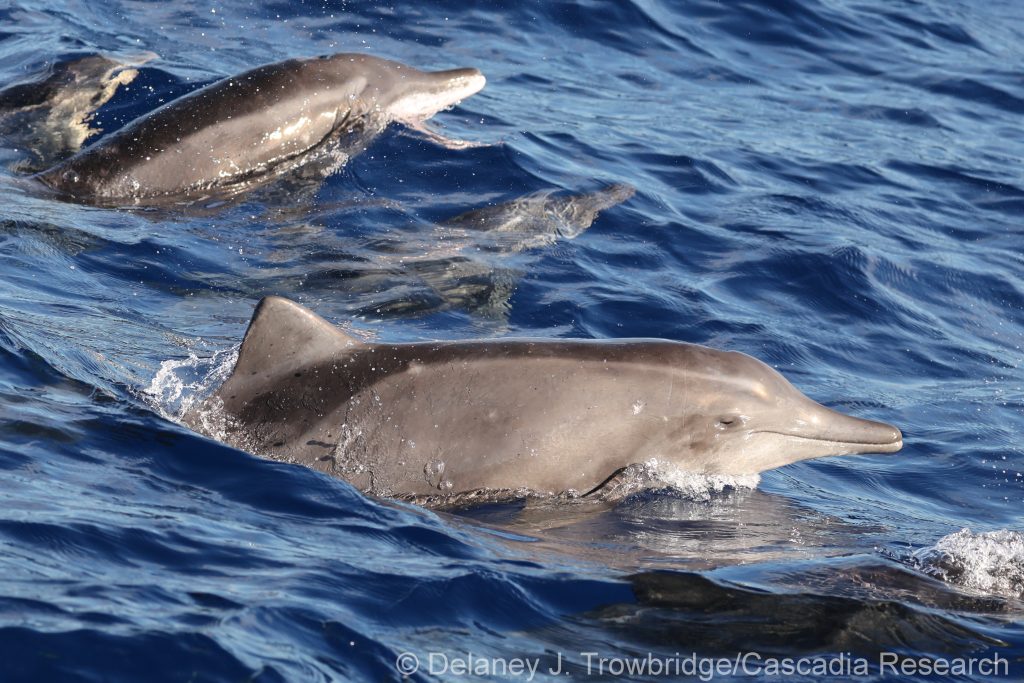
August 17th was our first day on the water. The lingering winds from Tropical Storm Lala limited where we were able to work, but we did have a productive day, with encounters with five different species of delphinids, including melon-headed whales. We were able to get one LIMPET satellite tag deployed (pictured above), and are looking forward to tracking this group. If you want to learn more about melon-headed whales in Hawai‘i check out our web page on that species.
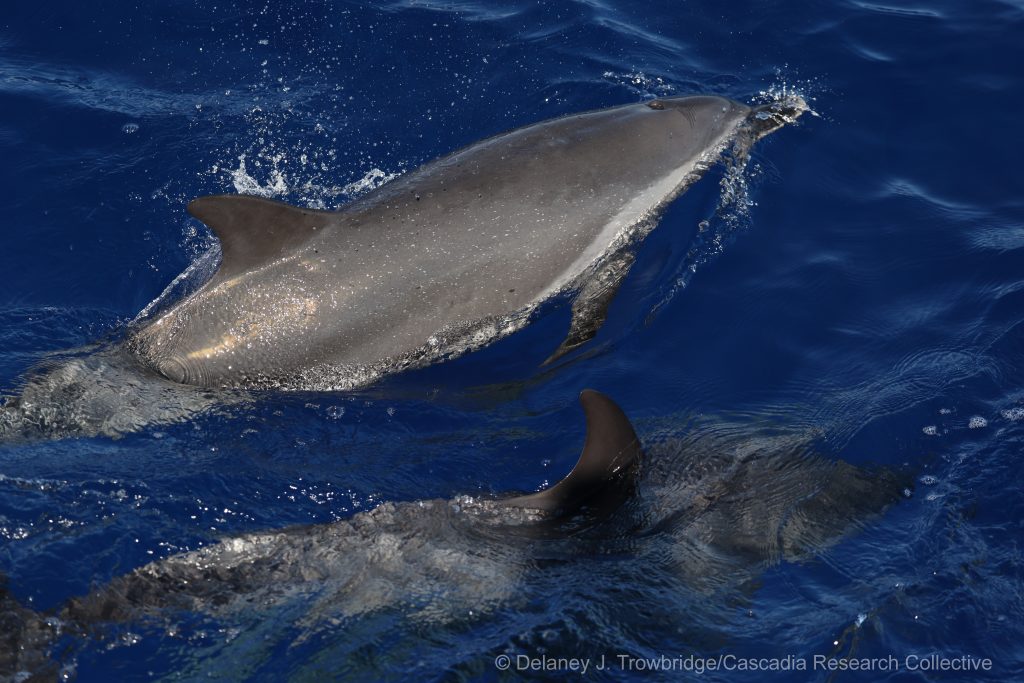
Seeing five species of delphinids in one day off Kaua'i may be our record, with the most unusual species for the day being a group of pantropical spotted dolphins! While this species has resident populations off other islands in Hawai'i, they are rarely seen off Kaua'i and when we've deployed satellite-linked tags on individuals off Kaua'i in the past they have quickly moved offshore and spent their time in deep, open-ocean waters, evidence they are part of an open-ocean population.
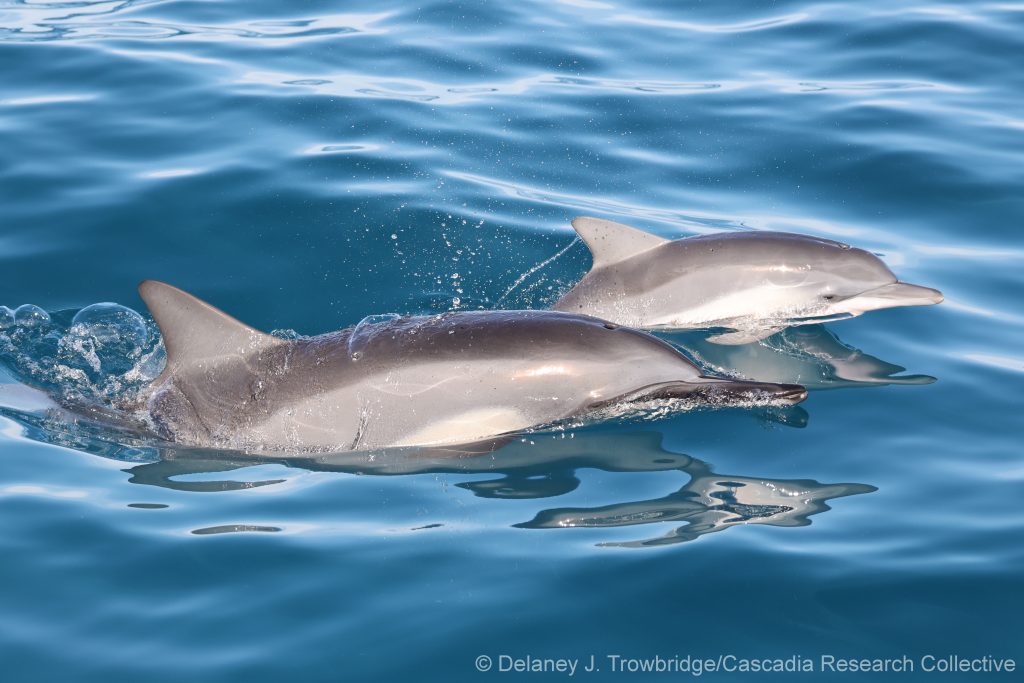
In addition to the rarely-seen pantropical spotted dolphins, we also encountered some of the resident spinner dolphins, including this mother and newborn calf.
August 16th update
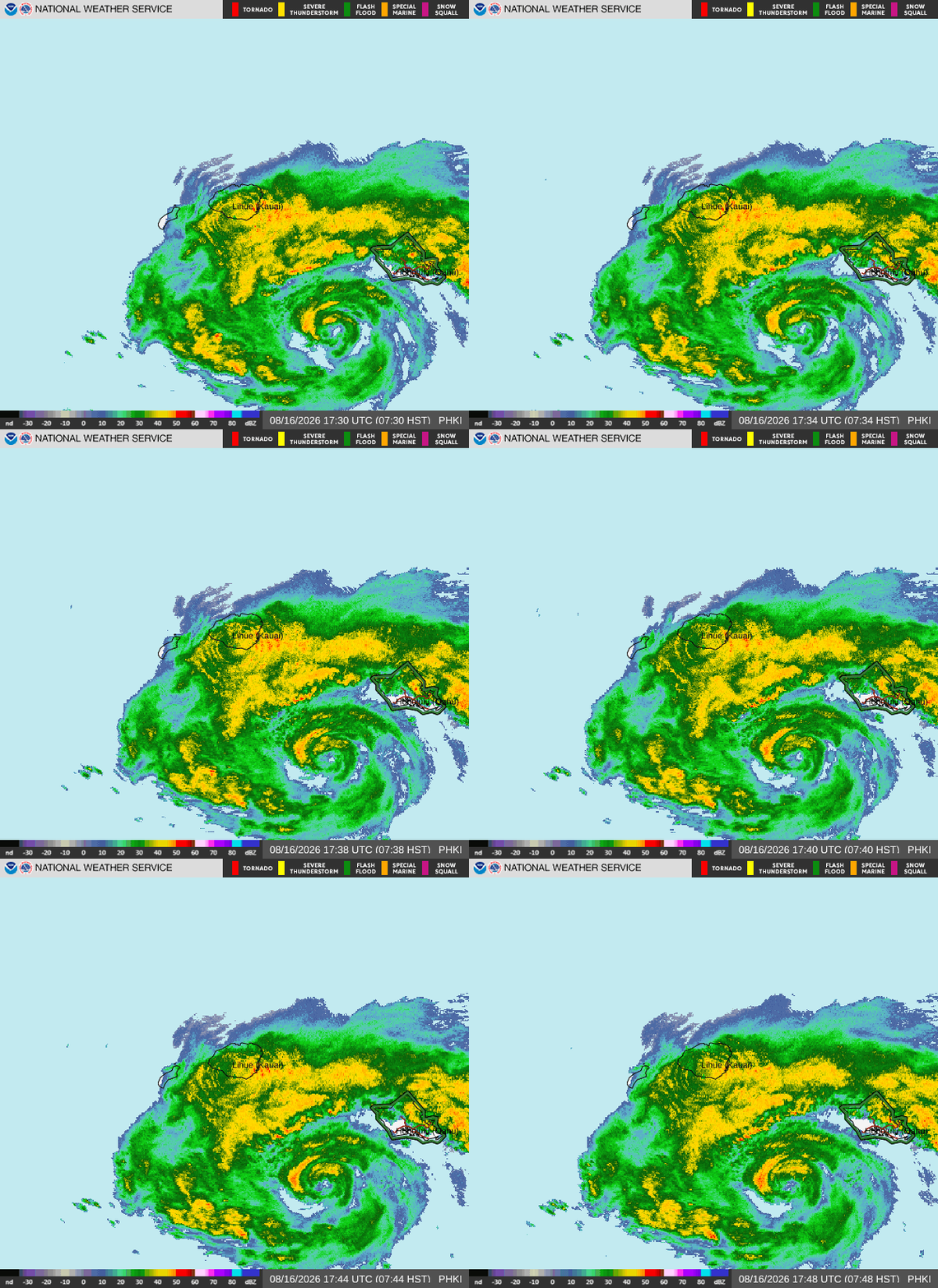
Today was supposed to be our first day on the water, but the passing of tropical storm Lala kept us on land. Where we are staying on Kaua'i had a lot of rain and some wind, but we got off lightly compared to most areas throughout the islands. We are hoping the remnants of the storm will pass quickly and we'll be able to continue our work.
The photo at the top of the page was taken during our February 2025 Kaua'i effort, of a Blainville's beaked whale breaching. All photos taken under NMFS Permit No. 26596.